Overview
It’s important that you create a definition that suits your organisation as this is the foundation for an AI policy, principles or standard so your teams are clear on what is considered AI and what is not.
Dynamic
Within these discussions, it’s often to start with a definition of AI as this has evolved over the past 5 years considerably. The OECD shared their evolution here: https://oecd.ai/en/wonk/definition
It is important that your definition covers the current state but also considers the significant advancements, such as into all types of media, coming in the near future.
Communicating
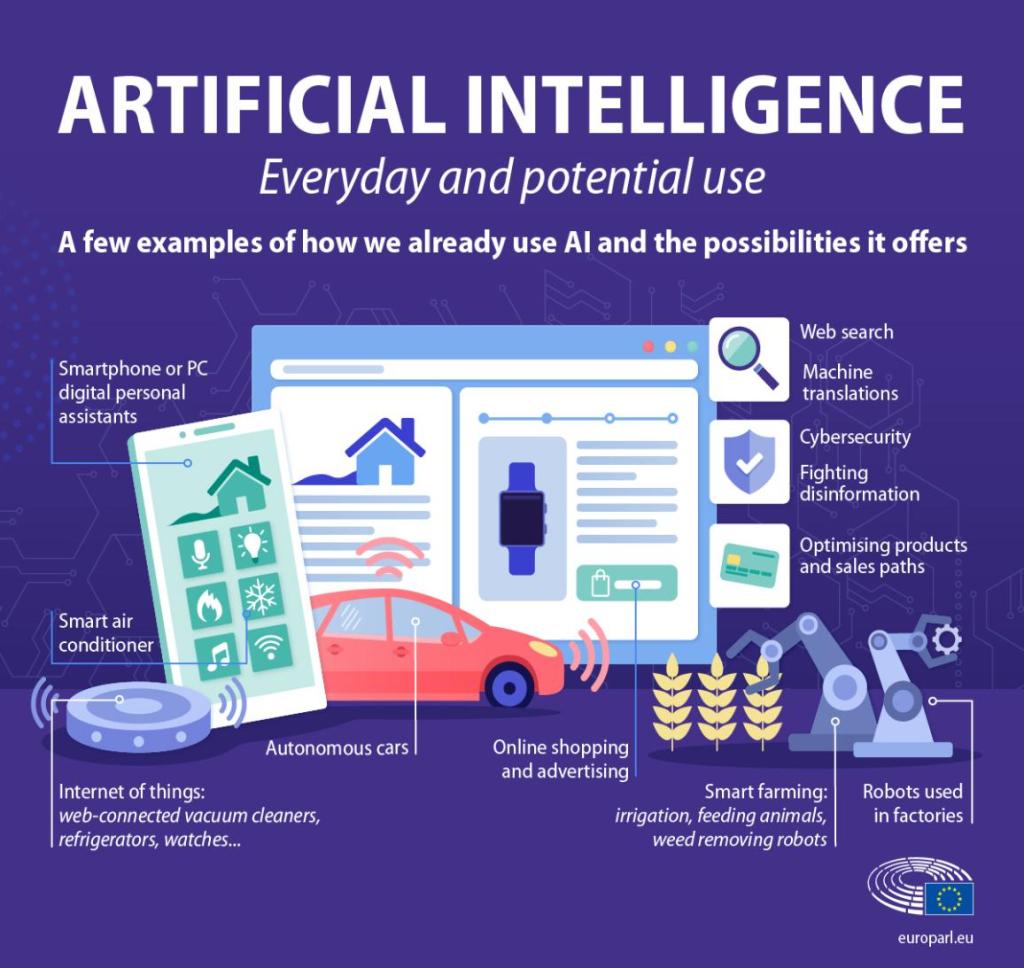
It is important to have a clear way of communicating Artificial Intelligence (AI) across your organisation for your own team, leadership and Board. The uses of AI within your organisation may also need to be shared with stakeholders, shareholders and regulators.
EU Parliament have this for everyday use: https://www.europarl.europa.eu/topics/en/article/20200827STO85804/what-is-artificial-intelligence-and-how-is-it-used
Potential Definitions
The OCED (2023) definition of AI
An AI system is a machine-based system that, for explicit or implicit objectives, infers, from the input it receives, how to generate outputs such as predictions, content, recommendations, or decisions that can influence physical or virtual environments. Different AI systems vary in their levels of autonomy and adaptiveness after deployment.
This being from a policy organisation using complex words and can be quite hard to understand for most people (although also highly accurate).
The EU definition of artificial intelligence (AI)
AI is the ability of a machine to display human-like capabilities such as reasoning, learning, planning and creativity.
AI enables technical systems to perceive their environment, deal with what they perceive, solve problems and act to achieve a specific goal. The computer receives data – already prepared or gathered through its own sensors such as a camera – processes it and responds.
AI systems are capable of adapting their behaviour to a certain degree by analysing the effects of previous actions and working autonomously.
https://www.europarl.europa.eu/topics/en/article/20200827STO85804/what-is-artificial-intelligence-and-how-is-it-used
The EU definition is pretty good outlining the human-like capabilities but references to a “computer” is slightly unusual as it’s likely to be from a computer, ecosystem or the internet. Also it’s questionable whether all AI is acting to achieve a specific goal – that is more similar to machine learning.
The 10 year old definition of AI
An AI system is a smart machine.
- It gets information (input) and uses that to do things (actions) like creating stuff (text, images, video), giving advice or making choices.
- These actions can change things in the real or digital world.
- It may work on their own (or require humans).
- It can learn from their experiences after they are set up.
- Each AI system can do this differently.
There is no single definition of AI and this will continue to evolve (no doubt even the above examples from March 2024 will look dated soon).
Wrap Up
It’s important that you create a definition that suits your organisation as this is the foundation for an AI policy, principles or standard so your teams are clear on what is considered AI and what is not.
 Data + AI
You must be logged in to post a comment.